
5 Best Golf Simulators For Home In 2026 (For Every Budget)
Setting up a home golf simulator sounds simple enough until you realize your ceiling is two inches too low, your budget won’t cover both the launch monitor and the enclosure, and every product out there claims “tour-level accuracy.” The best golf simulators for home sit at the intersection of spin rate capture accuracy, realistic ball flight, and a price point that won’t wreck your household budget. After reviewing dozens of setups across different price ranges and room configurations, this guide covers five options worth serious consideration.
The research approach for this ranking
Product pages, verified buyer reviews, and third-party coverage across golf equipment directories shaped this list. Only options with documented real-world use in home simulator environments made the cut. Pricing details, feature specs, and installation requirements were cross-checked against multiple sources before anything was included.
-> See the full research breakdown
- Foresight Sports – Best for professional-grade home simulation and launch monitor accuracy
- FlightScope – Best for professional golf launch monitoring and club fitting
- Garage Golf – Best for custom golf simulator builds
- LaunchPad Golf – Best for year-round golf entertainment and corporate/social golf experiences
- Simply Golf Simulators – Best for golf simulator sales and custom residential/commercial installations
Why Golf Simulators For Home Matter
Picking the wrong simulator setup can cost you more than money. Limited ceiling height and tight room dimensions are the first filters that knock out otherwise solid options, and buyers often discover this only after purchase.
High upfront costs for premium launch monitors and enclosures make every decision feel heavier. And cutting corners on ball speed measurement accuracy or spin rate capture often means the data you’re practicing with doesn’t reflect reality at all.
The right setup closes that gap. When launch angle precision is measured in fractions of a degree and spin rate capture holds steady across club types, practice sessions actually translate to the course. That kind of feedback loop is what separates a home simulator that collects dust from one that genuinely improves your game.
Top 5 Golf Simulators For Home Breakdown and Comparison
Note: All data in this table is sourced from review platforms and the official websites of the listed companies.
| Company Name | Years Operating | Headquartered In |
| Foresight Sports | Est. 2009 | San Diego, California |
| FlightScope | Est. 1989 | Orlando, Florida |
| Garage Golf | N/A | Fort Lauderdale, FL |
| LaunchPad Golf | N/A | Okotoks, Alberta, Canada |
| Simply Golf Simulators | Est. 2021 | Lakewood Township, US |
1. Foresight Sports – Best for Professional-Grade Home Simulation and Launch Monitor Accuracy
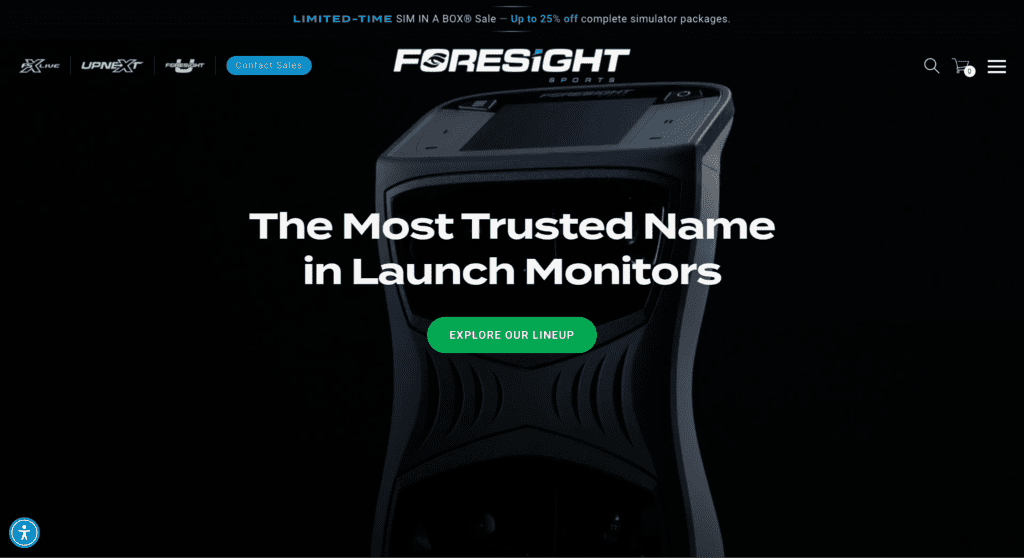
What Does Foresight Sports Do?
Foresight Sports designs and manufactures performance analysis technology out of its San Diego, California, facility. They cover everything from launch monitors and simulation software to smart mobility tools, all built for both commercial facilities and home setups. Their golf simulator for home lineup draws on the same technology trusted by tour professionals, making it one of the few options where residential buyers aren’t getting a watered-down version of the pro product. With over 15,000 units deployed globally, the depth of real-world validation here is hard to match.
Why Foresight Sports Stands Out for Golf Simulators For Home:
Foresight Sports solves the accuracy gap that plagues most consumer-grade simulators, where ball speed readings drift from Trackman baseline figures and spin data come back inconsistent across sessions. The GCQuad winning Golf Digest’s Editors’ Choice Award for Best Launch Monitor four years running isn’t marketing fluff. It’s the kind of external validation that actually tells you something.
Summary of Real User Reviews:
From what the reviews show, the consistent theme is trust in the data. Golfers who’ve used Foresight equipment note that shot feedback feels honest rather than flattering, which matters a lot when you’re trying to diagnose a swing problem. And honestly, the professional-level adoption at tour events (nearly 60% of the Fifth Major field used GCQuad) carries more weight than any review aggregator score.
2. FlightScope – Best for Professional Golf Launch Monitoring and Club Fitting
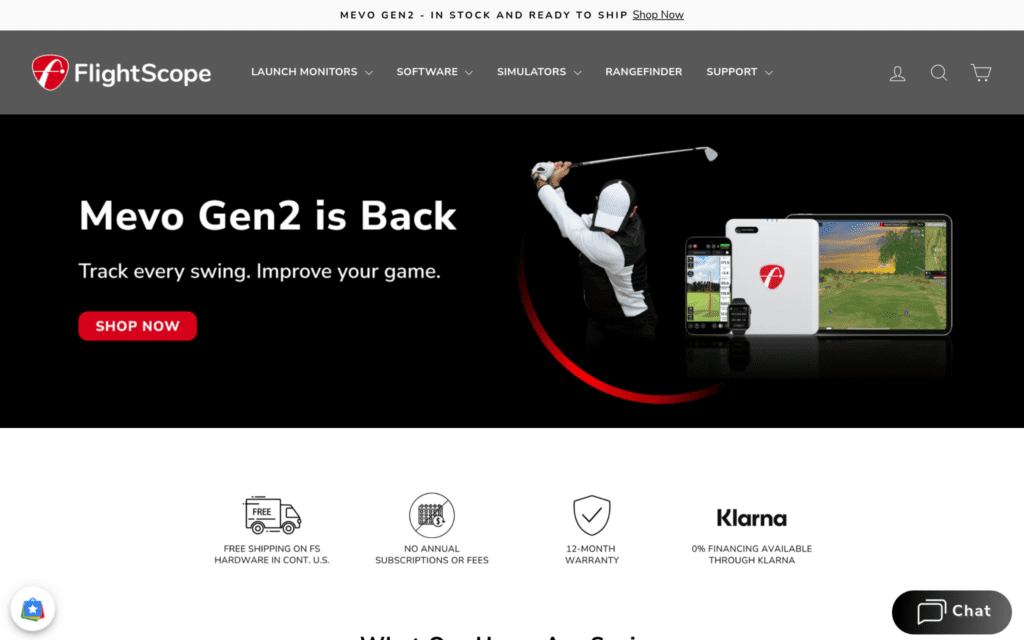
What Does FlightScope Do?
FlightScope built their reputation on 3D Doppler radar technology, originally developed for defense applications before being adapted for sports tracking. They cover golf, tennis, baseball, and cricket, but golf sits at the center of their consumer product line. Their Fusion Tracking technology, which combines 3D Doppler radar with image processing, delivers consistent ball flight data across a range of conditions (indoor or outdoor, no preference). The Mevo Gen2 and Mevo+ have become popular home simulator options because they don’t require an ongoing software subscription to deliver solid performance data.
Why FlightScope Stands Out for Golf Simulators For Home:
FlightScope’s subscription-free model directly addresses one of the real frustrations in the home simulator market, where ongoing software costs quietly inflate the total cost of ownership well beyond the initial hardware price tag. Their position as the first company to bring 3D Doppler radar to golf simulators back in 2003 means the underlying technology isn’t borrowed from somewhere else. It was built here first.
Summary of Real User Reviews:
Buyers regularly point to the accuracy of ball flight data as the standout strength, especially for the price tier the Mevo+ sits in. From what the data shows, users doing club fitting work at home find the spin rate and launch angle figures reliable enough for real equipment decisions. The subscription-free angle gets mentioned a lot, and based on the research, that usually means it’s a genuine differentiator rather than just a talking point.
3. Garage Golf – Best for Custom Golf Simulator Builds
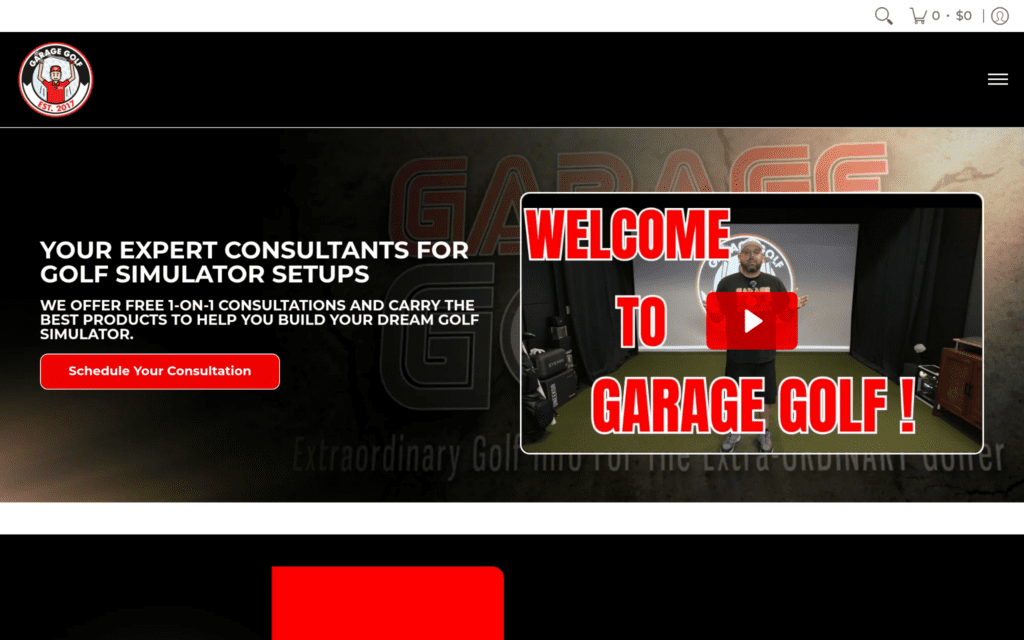
What Does Garage Golf Do?
Garage Golf isn’t a manufacturer. They’re a specialist retailer focused on helping customers design and build custom home simulator setups without overspending. Based in Fort Lauderdale, they stock launch monitors, hitting mats, enclosures, and putting greens, drop-shipped directly from top vendors to keep pricing sharp. The genuinely useful part of their model is the free 30-minute consultation, where a real person walks through your specific room dimensions, ceiling height, and budget before recommending anything. They also run a South Florida studio where buyers can test equipment before committing (not cheap equipment, so that matters a lot).
Why Garage Golf Stands Out for Golf Simulators For Home:
Garage Golf addresses the information problem that trips up most first-time simulator buyers, where conflicting product specs, unclear compatibility between components, and vague room requirement guidelines make purchasing feel like a gamble. Getting expert guidance before spending four or five figures on equipment is genuinely useful, and charging nothing for it is rare in this space.
Summary of Real User Reviews:
The consultation model draws consistent praise from buyers who felt overwhelmed by the sheer volume of product options before reaching out. From what the reviews show, customers value the no-pressure approach more than the product selection itself. For anyone building their first home simulator, having access to someone who has seen hundreds of builds before yours is worth a lot.
4. LaunchPad Golf – Best for Year-Round Golf Entertainment and Corporate/Social Golf Experiences

What Does LaunchPad Golf Do?
LaunchPad Golf operates as Canada’s leading year-round golf entertainment venue, using their proprietary Inrange radar ball tracking system to power immersive simulation experiences. They serve enthusiasts, corporate groups, and social gatherings across multiple Canadian locations, with recent expansion into Minnesota. While they’re not a direct-to-consumer simulator retailer, their technology and venue model are worth understanding because they represent what the best commercial-grade simulation feels like when it’s done right (think heated golf suites, a full restaurant, and a driving range all under one roof).
Why LaunchPad Golf Stands Out for Golf Simulators For Home:
LaunchPad Golf’s proprietary Inrange radar technology shows what genuinely accurate ball tracking looks like when deployed at scale, which sets a useful benchmark for anyone evaluating home simulator options. Their expansion into the US market signals growing demand for simulation-level experiences outside the traditional course setting.
Summary of Real User Reviews:
LaunchPad Golf draws strong feedback for the quality of the simulation experience, with guests noting that the ball tracking feels accurate and responsive compared to other entertainment venue setups. From what the data shows, the corporate and social format works well because the technology doesn’t require guests to understand it. It just works consistently. That kind of reliability is rare in high-volume simulation environments.
5. Simply Golf Simulators – Best for Golf Simulator Sales and Custom Residential/Commercial Installations
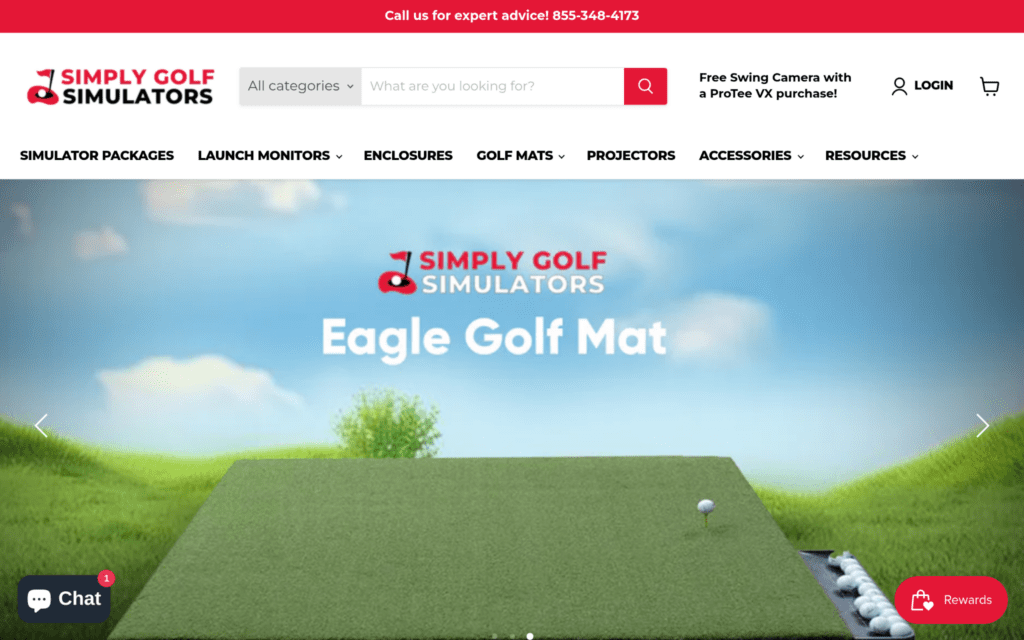
What Does Simply Golf Simulators Do?
Simply Golf Simulators is an online retailer that covers the full home simulator setup, from launch monitors and enclosures to projectors, hitting mats, and putting greens. Founded in 2021 and based in Lakewood Township, they supply both residential buyers and commercial customers, including training studios, golf shops, and sports bars. What sets them apart from generic equipment retailers is the depth of educational content they publish to help buyers make informed decisions before purchasing. Free shipping across the continental US, a 30-day return policy, and a price-matching guarantee (not common in this space) round out their customer-friendly approach.
Why Simply Golf Simulators Stands Out for Golf Simulators For Home:
Simply Golf Simulators removes the post-purchase regret problem that hits a lot of home simulator buyers, where equipment arrives and doesn’t fit the room, doesn’t match the projector specs, or doesn’t work with the chosen launch monitor. The combination of a price-matching guarantee and a generous return window makes it much easier to commit to a purchase without full certainty upfront.
Summary of Real User Reviews:
Customer service is the phrase that comes up most often in reviews. And from what the data shows, that reputation is consistent rather than cherry-picked. Buyers mention that response times are fast and that staff know the product lineup well enough to actually help, not just escalate. For an online-only retailer selling high-ticket equipment, that level of service is what keeps repeat buyers coming back.
Research Methodology and Selection Process
Initial Data Collection
The process started by pulling together a broad list of companies operating in the home golf simulator space. Sources included golf equipment directories, specialty retailer listings, simulator review platforms, manufacturer websites, and editorial coverage from golf media publications. The goal at this stage was breadth, not filtering, so the initial pool included manufacturers, retailers, custom builders, and venue operators with relevant technology credentials.
Shortlisting Phase
From that initial pool, options without verifiable real-world presence in the home simulator market were removed. This included companies with limited documented installations, no traceable product history, or review profiles too thin to draw reliable conclusions from. The review pattern analysis at this stage flagged which companies showed consistent feedback themes versus one-off praise, and that distinction shaped the shortlist considerably.
Verification of Claims
Each shortlisted company’s published claims were cross-checked against third-party sources. Award claims were traced back to issuing organizations. Technology specifications were checked against independent test data where available. Any company making accuracy claims without external validation to support them was evaluated more conservatively. This step matters particularly in the simulator space, where “tour-level accuracy” gets used loosely and often without supporting data.
Authority and Industry Contribution Layer
Companies were then evaluated for their standing within the broader golf equipment industry. This included acknowledgment from publications like Golf Digest, adoption by tour professionals and PGA instructors, mentions in equipment manufacturer partnerships, and any documented contribution to simulation technology development. Companies that have been referenced in credible industry coverage or have won recognized awards were weighted more favorably at this stage.
Golf Simulators For Home-Specific Evidence
The final filter focused on home use cases. Companies needed to show dedicated attention to residential installation requirements, including ceiling height guidance, room dimension recommendations, and clear total cost of ownership information covering both hardware and software. Verified reviews from home users (not just commercial buyers) were also factored in here. Options that excelled in commercial environments but lacked home-specific documentation or support resources were noted and positioned for their actual strengths rather than assumed applicability to home setups.
How to Choose the Right Golf Simulators For Home
Buying a home simulator isn’t just a hardware decision. It’s a decision that involves your room, your ceiling, your budget, your software preferences, and the kind of practice you actually want to do. Here are the five things that matter most when narrowing down options.
- Industry and Domain Experience: Look for companies with documented real-world deployments, not just product listings. A manufacturer with thousands of installed units across residential and commercial environments understands the failure points that newer entrants haven’t encountered yet.
- Features and Service Details: Ball speed accuracy, spin rate capture, launch angle data, and course simulation quality are the primary features worth scrutinizing. Free consultations, return policies, and educational resources are the service layer that determines whether the purchase process goes smoothly.
- Pricing Structure: Factor in the full cost, hardware, enclosure, projector, hitting mat, and any ongoing software subscription. A low entry price with a mandatory annual subscription can cost more over three years than a premium one-time purchase.
- Results Measurement: Ask how accuracy is validated. Companies that benchmark against Trackman or cite specific RPM and degree-level precision are giving you something to hold them to.
- Industry Knowledge and R&A/USGA Equipment Conformance Standards: Confirm that the launch monitor and simulation software meet conformance standards if you plan to use data for club fitting or competitive prep. Not every consumer product does.
Bottom Line
Choosing the right home golf simulator comes down to matching technology accuracy with real room constraints and honest budget expectations. Foresight Sports leads on professional-grade precision, FlightScope delivers strong value without subscription lock-in, and Garage Golf fills the gap for buyers who need guidance before spending. Simply Golf Simulators makes the purchase process safer, and LaunchPad Golf shows where the technology ceiling actually sits. As home simulation continues to grow, the gap between consumer and pro-grade setups keeps narrowing.
