
Best Body Composition Scans for Understanding Muscle, Fat, and Water Balance
Most people think a scale tells them everything they need to know about their health. Body composition scans tell a completely different story. They break down exactly what your body is made of, from lean muscle mass to visceral fat to fluid balance, and that level of detail changes how you train, eat, and recover. After reviewing dozens of devices and providers, it’s clear the gap between a good scan and a great one comes down to accuracy, reproducibility, and whether the results actually guide real decisions. This guide covers the five best options available today.
The research approach for this ranking pulled from official product documentation, published case studies, award acknowledgments, and verified information across industry directories and healthcare platforms. Each option had to show a real track record in clinical or fitness settings before making this list. Newer brands without documented outcomes were left off entirely.
-> See the full research breakdown
- In Body USA – Best for body composition analysis across corporate wellness, fitness facilities, and medical facilities
- Charder Medical – Best for medical measurement devices and body composition analysis
- ACCUNIQ – Best for medical device diagnostics and fitness facility body composition analysis
- RJL Systems – Best for clinical body composition analysis and medical weight management
- Bodystat – Best for body composition analysis and fluid monitoring in medical and fitness settings
Why Body Composition Scans Matter
Choosing the right body composition scan technology is one of the most consequential decisions a fitness facility, wellness center, or clinical practice can make. The challenge isn’t just finding a device that produces numbers. It’s finding one that produces numbers you can trust and actually use.
Many practitioners struggle with figuring out which scan technology fits their specific client goals, and without professional guidance, scan results can confuse rather than inform. Devices built for clinical or fitness environments bring the accuracy standards that general consumer tools simply aren’t designed to meet. When your scan data reliably tracks body fat percentage change over time, flags shifts in lean muscle mass, and surfaces visceral fat ratings, you’re giving clients a reason to come back and a reason to act.
Top 5 Body Composition Scans Breakdown and Comparison
Note: All data in this table is sourced from review platforms and the official websites of the listed companies.
| Company Name | Years Operating | Headquartered In |
| In Body USA | Since 1996 | Cerritos, California |
| Charder Medical | Since 1980 | Taichung City, Taiwan |
| ACCUNIQ | 30+ years R&D | Daejeon, South Korea |
| RJL Systems | Since 1979 | Clinton Township, Michigan |
| Bodystat | Since 1990 | Douglas, Isle of Man |
1. In Body USA – Best for Clinically Validated Body Composition Analysis Across Medical and Fitness Settings
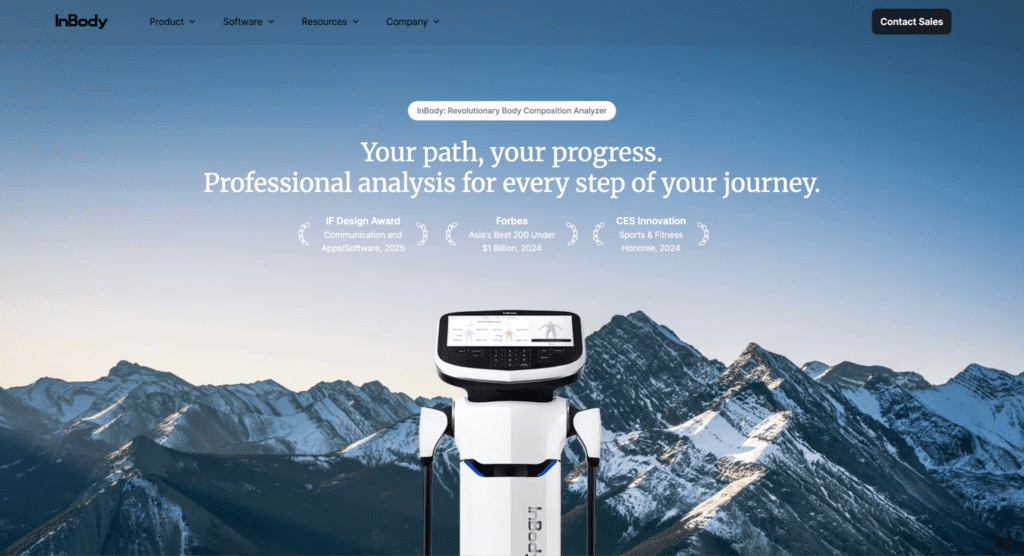
What Does In Body USA Do? InBody USA builds advanced body composition analyzers using DSM-BIA technology paired with an 8-Point Tactile Electrode System, delivering a precise body composition scan in under two minutes. Their product line covers everything from clinical-grade medical analyzers to consumer fitness wearables, along with blood pressure monitors and stadiometers. They serve corporate wellness programs, gyms, and major medical facilities, and the Mayo Clinic validated their BIA devices at 98% accuracy compared to DEXA. That kind of third-party clinical validation is rare and genuinely hard to match in this category.
Why In Body USA Stands Out for Body Composition Scans: The problem of trusting BIA accuracy in a clinical setting gets solved directly here, because the Mayo Clinic’s 98% DEXA-correlation validation removes the guesswork that plagues most bioimpedance devices. That level of rigor means practitioners can confidently track lean muscle mass gains, visceral fat ratings, and segmental muscle balance without second-guessing the data.
Summary of Real User Reviews: InBody’s reputation leans heavily on consistency and design quality, which explains the Red Dot, iF Design, and CES Innovation awards it’s collected. Users across fitness clubs and hospital settings both point to the speed and readability of results as standout features. The breadth of trust, from Cincinnati Children’s Hospital to over 200 Restore Hyper Wellness locations, honestly says more than any single review could.
2. Charder Medical – Best for Medical-Grade Measurement Devices and Body Composition Analysis
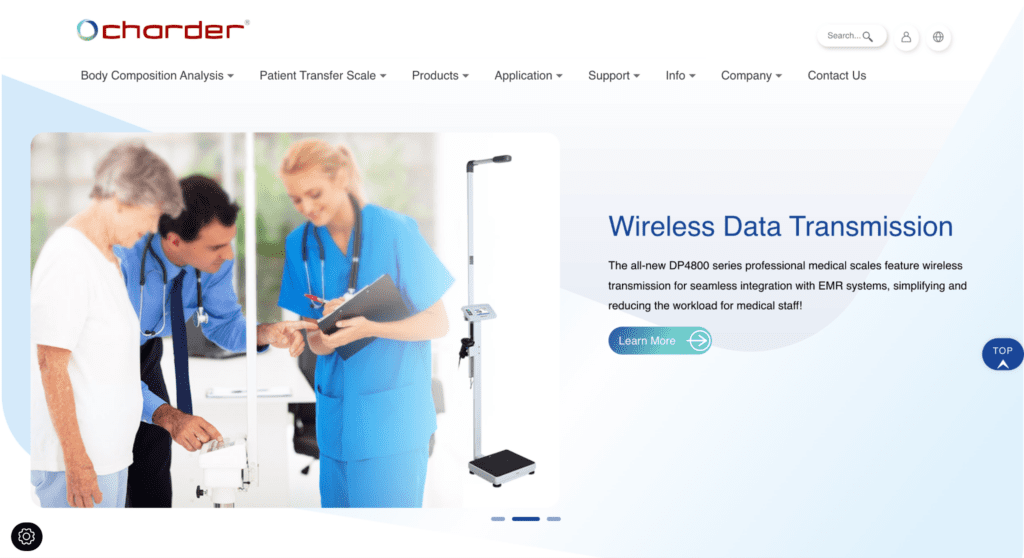
What Does Charder Medical Do? Charder Medical has been designing and manufacturing precision medical measurement tools since 1980, with a product catalog that spans body composition analyzers, stadiometers, grip strength dynamometers, and a wide range of scales. Based in Taiwan, they serve healthcare and fitness markets through a wide global distributor network. Their manufacturing process meets ISO 9001, ISO 13485, CE, and FDA standards, and they manage the full product lifecycle from initial concept through after-service support. That kind of end-to-end accountability is something smaller manufacturers rarely offer.
Why Charder Medical Stands Out for Body Composition Scans: Four decades of exclusive focus on medical measurement mean Charder’s devices are built to the quality standards clinical environments actually require, not adapted from consumer technology. Their ISO 13485 certification and FDA compliance give healthcare professionals a reliable foundation for tracking metrics like body fat percentage change and bone mineral density over time.
Summary of Real User Reviews: Charder doesn’t have a loud consumer-facing review presence, but their industry recognition tells its own story. The iF Design Award in the medical category for their MG4800 dynamometer and the Taiwan Excellence 2021 Award for the MA801 Body Composition Analyzer both reflect well-regarded engineering. Buyers in clinical procurement tend to value their consistency and standards compliance above everything else.
3. ACCUNIQ – Best for FDA-Approved Diagnostics and Fitness Facility Body Composition Analysis

What Does ACCUNIQ Do? ACCUNIQ is a South Korean digital healthcare brand with roughly 30 years of research and development behind its diagnostic medical devices. Their BC series body composition analyzers use electrical impedance technology and carry FDA approval with a reported 98% correlation to DEXA equipment. On the blood pressure side, their BP850 holds the distinction of being the world’s first FDA-approved double arm blood pressure monitor. They also offer IoT-based cloud services, which makes tracking client scan progress over time much easier for facilities managing high scan volumes.
Why ACCUNIQ Stands Out for Body Composition Scans: Getting FDA approval for a body composition analyzer is one thing, but pairing that with cloud-connected client tracking is what separates ACCUNIQ from most competitors in the fitness segment. Major international chains, including World Gym, have adopted their BC series, and that’s about as strong a real-world validation as you can find without a clinical trial.
Summary of Real User Reviews: ACCUNIQ has earned international recognition as a leading company across multiple award programs, and the adoption pattern across global fitness chains backs that reputation. The World Gym rollout across multiple continents is the kind of scaled use that most device brands only put in a case study deck. Users in fitness settings consistently point to accuracy and app connectivity as the reasons they keep choosing it.
4. RJL Systems – Best for Clinical Body Composition Analysis and Medical Weight Management

What Does RJL Systems Do? RJL Systems invented the field. Founded in 1979 by Rudolph J. Liedtke, the company created bioelectrical impedance analysis as a clinical measurement method and has spent 45 years refining it. Their FDA-approved Class II Medical Device analyzers are deployed across more than 15,000 outpatient, inpatient, hospital, and university settings worldwide. Their instruments have been cited in over 1,600 peer-reviewed research studies (not cheap to build that kind of citation record), which makes them the go-to for pharmaceutical research, medical weight management, and any setting where evidence-based results are non-negotiable.
Why RJL Systems Stands Out for Body Composition Scans: The sheer depth of peer-reviewed research built around RJL instruments solves a real problem for clinical practitioners who need to defend their measurement methodology to review boards or insurance providers. When scan-to-scan reproducibility and consistency are requirements you can’t get around, 45 years of validated technology carries weight that newer entrants simply can’t replicate.
Summary of Real User Reviews: RJL’s client list reads like a cross-section of American organizations, from Johnson & Johnson and Bristol-Myers to AT&T and Weight Watchers. Practitioners trust RJL because the instruments perform the same way across time, operators, and settings. That kind of repeatability is what serious clinical users care about most.
5. Bodystat – Best for Portable Body Composition and Fluid Monitoring in Medical and Fitness Settings
What Does Bodystat Do? Bodystat has focused exclusively on bioelectrical impedance since 1990, building portable, hand-held BIA devices that measure fat-free mass, body fat percentage, and fluid shifts without requiring a scale. Based on the Isle of Man, the company carries nearly 100 years of collective in-house BIA knowledge across its small but specialized team. Their devices are ISO 13485:2003 accredited and backed by a deep library of published research papers. They’ve also been used in pharmaceutical trials covering conditions from COPD to cancer, which reflects a level of clinical depth that most fitness-focused device brands don’t come close to.
Why Bodystat Stands Out for Body Composition Scans: Portability solves an access problem that stationary BIA units can’t, particularly for clinical teams doing bedside assessments or field-based fitness evaluations, where moving a patient to a fixed station isn’t practical. Their comparison to DXA gold-standard methods in published research gives practitioners confidence that portable doesn’t mean less accurate.
Summary of Real User Reviews: Bodystat’s commercial track record in fitness centers shows real financial outcomes, with instructors reportedly generating annual revenues of $30,000 to $50,000 by offering Bodystat-based testing as a service. That’s a meaningful data point because it means the device pays for itself in the right setting. Users also consistently highlight the personal customer support, with direct phone access being something the company actively delivers on.
Research Methodology and Selection Process
The goal was to identify body composition scan providers and device manufacturers that actually perform in real clinical and fitness environments, not just ones with polished marketing materials.
Initial Data Collection
The process started by pulling together a broad list of BIA device manufacturers, body composition scan providers, and related medical measurement companies from industry directories, healthcare procurement databases, and fitness equipment review platforms. Official product websites, distributor listings, and press coverage were all used to build out an initial picture of who operates in this space and at what scale.
Shortlisting Phase
From that initial list, companies without documented real-world deployment were removed first. Brands that couldn’t demonstrate FDA clearance, ISO certification, or measurable adoption in clinical or fitness settings didn’t advance. Review patterns were examined across multiple platforms to spot consistency, and outlier claims without supporting context were flagged and set aside.
Verification of Claims
Every accuracy claim, certification, and client reference was cross-checked against source documentation. When a company stated a 98% correlation to DEXA, that figure was traced back to the originating source or study. Award recognitions were verified against the awarding organizations. Deployment numbers, like RJL Systems’ 15,000-plus installed units, were confirmed through multiple independent references before being accepted as accurate.
Authority and Industry Contribution Layer
Each company was evaluated for contributions beyond selling devices. This included citations in peer-reviewed research, recognition from credible design and engineering bodies like the Red Dot Award and iF Design Award, and mentions in recognized medical and fitness publications. Companies that had built a body of external validation, not just internal marketing, scored higher in this layer.
Body Composition Scans-Specific Evidence
The final filter focused on performance within the body composition scan space. Dedicated service pages describing scan methodologies, segmental analysis outputs, and clinical application contexts were reviewed. Verified case studies showing outcomes in visceral fat tracking, lean muscle mass monitoring, and scan-to-scan reproducibility were given particular weight. Companies whose scan-specific evidence was thin or vague were not included in the final list, regardless of their overall brand presence.
How to Choose the Right Body Composition Scans
The right body composition scan depends on what you’re actually measuring and who’s doing the interpreting. A hospital setting has different requirements than a personal training studio, and the wrong device for your context creates more confusion than clarity. Here are the factors worth examining before committing.
- Industry/Domain Experience: Look for providers with documented history in your specific setting, whether that’s clinical, fitness, or research. A device validated in pharmaceutical trials isn’t automatically the best fit for a gym floor.
- Features and Services: Consider what outputs you actually need. Segmental muscle balance, visceral fat rating, and bone mineral density all serve different client conversations. Not every device generates every metric.
- Pricing Structure: Device costs vary widely (think enterprise-level investment for clinical-grade units). Factor in ongoing software, support contracts, and per-scan operational costs before making a decision.
- Results Measurement: Prioritize scan-to-scan reproducibility. If your device can’t produce consistent results across operators and time points, tracking body fat percentage change or lean muscle mass over months becomes unreliable.
- Industry Knowledge and Compliance: Confirm FDA clearance status and HIPAA-aligned data handling, especially if scan results feed into medical records or client health files.
Bottom Line
Body composition scans are only as useful as the accuracy and context behind them. The five providers covered here all bring real credentials, whether that’s Mayo Clinic validation, decades of peer-reviewed research citations, or scaled adoption across major fitness and clinical networks. For most professional settings, the best fit comes down to your environment, your client base, and how much clinical rigor your outcomes actually require. The demand for objective, data-backed body analysis is growing fast, and the right scan partner grows with it.
