
The Science of Self-Powered Running (And Why It Changes Everything)
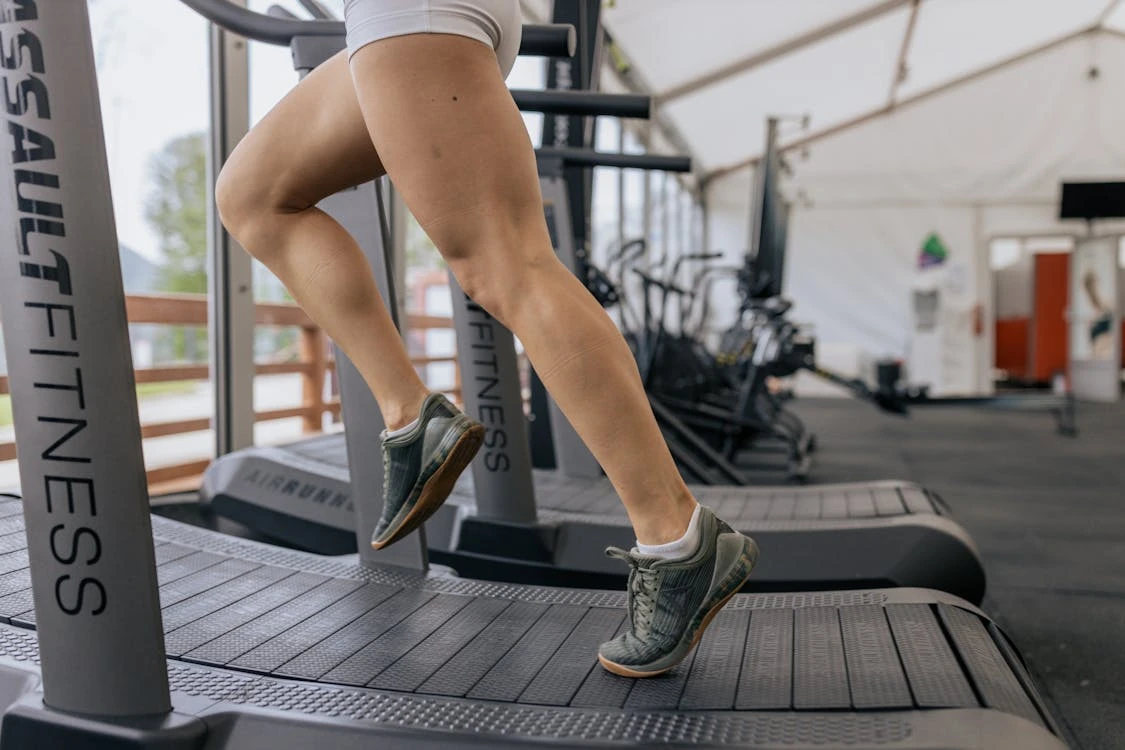
Running is one of the oldest forms of human movement. Yet most people do it in a way that quietly works against them.
The motorized treadmill has been the default for decades. But a growing body of research reveals a fundamental flaw in how it trains your body. Understanding that flaw, and what to do about it, can completely change the quality of your training.
Why Motorized Treadmills Work Against You
When you run on a motorized treadmill, the belt pulls your foot backward for you. That sounds minor. It is not.
This mechanical assist changes your running mechanics in measurable ways. Your hamstrings and glutes, which are responsible for driving you forward, do significantly less work than they would on open ground. Over time, this creates compensation patterns that carry over into real-world movement.
Studies comparing motorized treadmill running to overground running have found clear differences in stride length, hip extension, and posterior chain activation. In plain terms, the machine is doing part of your job for you, and your body adapts to the easier demand.
What Self-Powered Running Actually Does
A self-powered treadmill has no motor. The belt only moves when you drive it with your own legs. That single difference changes how your entire body responds.
Because you control speed through your own effort, your glutes, hamstrings, and calves stay engaged throughout every stride. Your cadence is self-regulated. Your output is honest. There is no belt forcing you to keep pace. If you are researching the best non-motorized options on the market, this guide will help you find a curved treadmill from top self-powered treadmill brands, including Woodway, Technogym, and French Fitness.
Research published in the Journal of Human Kinetics found that self-powered treadmill running produced significantly higher heart rate, oxygen consumption, and muscle activation compared to motorized running at the same perceived effort. You work harder without necessarily realizing it.
The Biomechanics Advantage
One of the strongest arguments for self-powered running is what it does to your form.
Motorized belts encourage heel striking because the belt is already in motion beneath you. On a self-powered surface, landing on your heel essentially stalls the belt and slows you down. The machine corrects poor mechanics naturally, without any coaching cue required.
Most runners who switch to a curved treadmill report that their foot strike shifts toward a midfoot or forefoot pattern within just a few sessions. This reduces impact forces on the knee and ankle and more closely mirrors how efficient runners move at every level.
The Conditioning Effect: More Output, Less Time
Curved treadmills have become a fixture in high-performance training environments, from NFL facilities to elite CrossFit gyms. The reason is straightforward: the metabolic demand is higher.
Studies suggest that running on a self-powered curved treadmill can increase caloric burn by 30% or more compared to motorized running at a similar effort level. Your cardiovascular system is taxed more. Your muscles recruit more fibers. The conditioning effect per minute of work is simply greater.
This makes curved treadmills especially effective for sprint intervals. Efforts feel genuinely explosive because the feedback is immediate. When you slow down, the belt slows down with you. There is no lag, no button to press, and no speed setting to override.
How to Add Self-Powered Running to Your Training
You do not need to overhaul your current routine. Self-powered treadmill work integrates best when added with intention.
Start With Short Intervals
If you are new to curved treadmills, begin with sprint intervals of 15 to 20 seconds followed by full recovery. The demand is much higher than what most people expect. Trying to run steady-state for 30 minutes in your first session is a fast path to early burnout.
Use It for Sprints and High-Intensity Work
Self-powered treadmills shine in high-intensity contexts. Use them for sprint repeats, metabolic conditioning circuits, or any session where peak output is the goal. For long, slow endurance runs, an outdoor route or motorized belt may still serve you better.
Pair It With Posterior Chain Strength Work
Because self-powered running places higher demands on the glutes and hamstrings, it pairs naturally with strength training that targets the same muscles. Deadlifts, hip thrusts, and Romanian deadlifts complement this running style and accelerate your adaptation over time.
The Bigger Picture
Most fitness equipment is built around accessibility and comfort. That is not a criticism. But it does mean the default option is rarely the most effective one.
Self-powered running is harder, less forgiving, and more demanding than what most people are used to. Those are features, not drawbacks. The challenge is the adaptation signal. The discomfort is the mechanism.
Your body responds to the demands placed on it. When a machine removes part of that demand, you adapt to an easier environment. When the machine requires you to generate every inch of movement yourself, you adapt to a harder one.
The science here is not complicated. Make your body do the work, and your body gets better at doing work. That principle has never changed. The equipment that applies it most directly is finally getting the mainstream attention it deserves.
